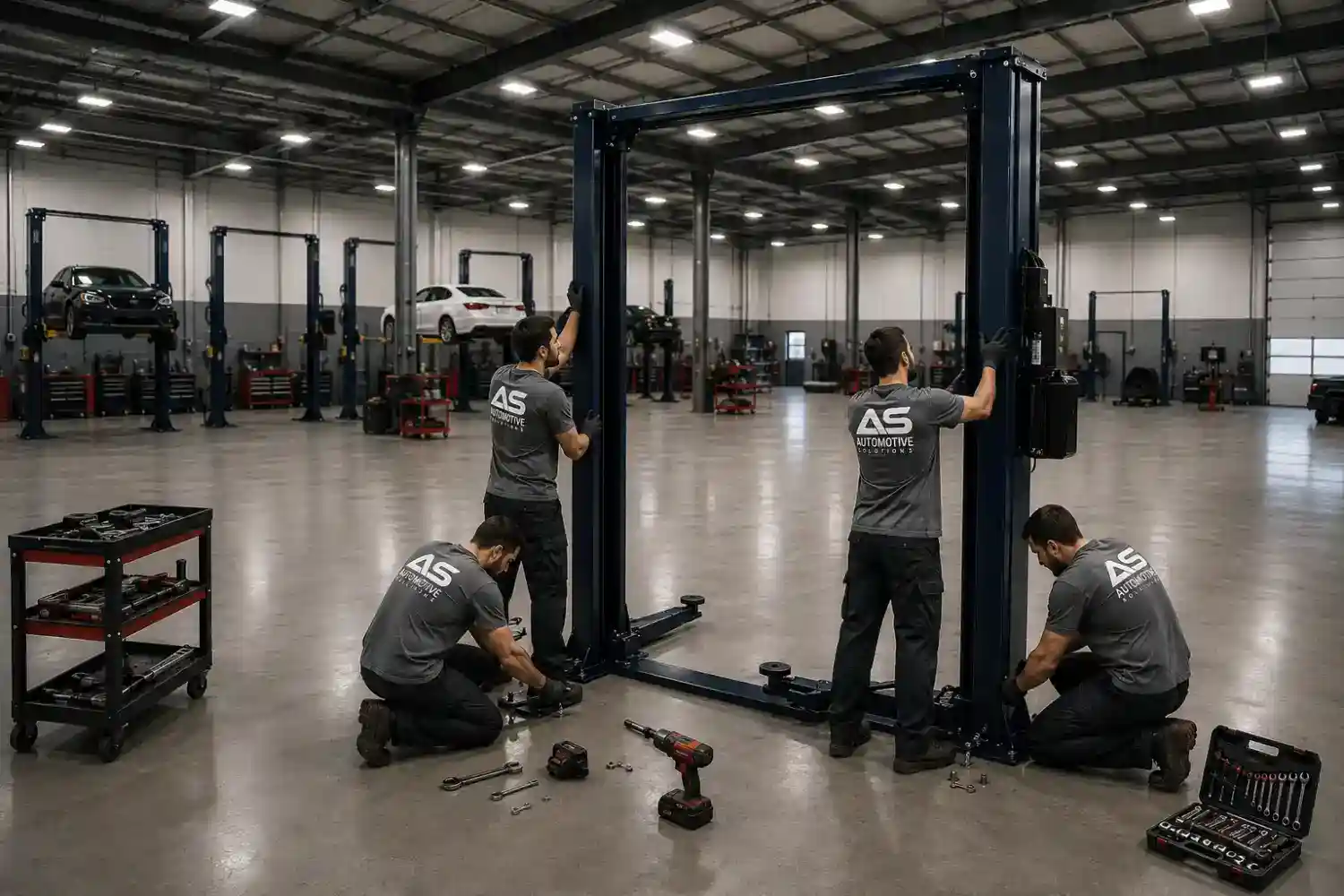







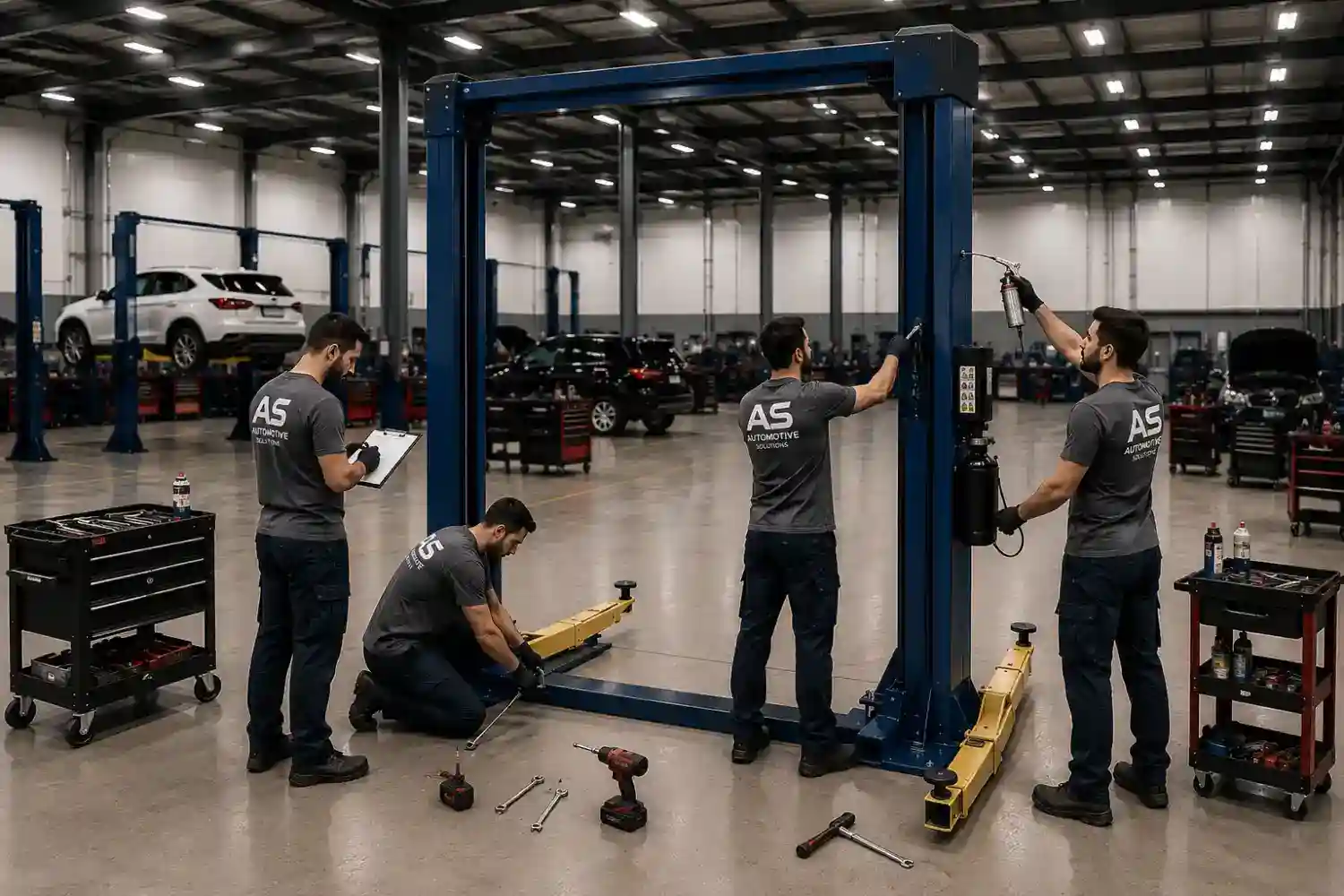
A 2 post lift is one of the most important pieces of equipment in an automotive workshop, helping technicians perform vehicle inspections, repairs, and maintenance safely and efficiently. Regular maintenance of a 2 post lift is essential to ensure smooth operation, improve equipment lifespan, and maintain workplace safety. Whether you are using a base connected 2 post lift or a clear floor 2 post lift, proper inspection and servicing help prevent unexpected downtime and equipment failures. This complete 2 post lift maintenance guide covers essential inspection steps, servicing tips, and safety practices to help workshops maintain reliable lift performance and extend equipment life.
A 2 post lift works with different mechanical and hydraulic components including lifting cables, hydraulic cylinders, arms, safety locks, columns, pulleys, and anchor bolts. Each component requires regular checking to keep the lift operating safely and reliably.
2 Post Lift Maintenance Process:
Inspect Lift Columns:
Lift columns support the complete lifting structure and should be checked regularly for damage, rust, cracks, or unusual movement.
Maintenance Tip: Clean the columns frequently and check for any signs of wear or corrosion. Keep the sliding areas free from dust and workshop debris.
Lubricate Moving Parts:
Proper lubrication helps reduce friction and ensures smooth movement of the lift components.
Lubricate:
- Carriage movement areas
- Bushings and sliders
- Hinges and pivot points
- Pulleys and moving joints
Maintenance Tip: Use manufacturer-recommended lubricant and avoid over-lubricating, as excess grease can attract dirt and reduce performance.
Check Hydraulic System:
The hydraulic system is responsible for lifting and lowering vehicles. Regular inspection helps maintain lifting performance.
- Hydraulic oil level
- Oil leaks
- Hydraulic hoses
- Cylinder performance.
Maintenance Tip: Never ignore small hydraulic leaks. A damaged hose or leaking connection can reduce lifting capacity and create safety risks.
Inspect Lifting Cables and Chains:
Cables and chains carry the lifting load and require regular inspection.
Check for:
- Broken wires
- Rust
- Stretching
- Uneven wear
Maintenance Tip: Replace damaged cables or chains immediately and do not operate the lift if the lifting components show signs of failure.
Check Safety Lock System:
Safety locks are critical components that hold the vehicle securely at the required height.
Inspect
- Lock engagement
- Lock release system
- Lock teeth and mechanism
Maintenance Tip: Always test safety locks before lifting a vehicle. Never rely only on hydraulic pressure to hold the vehicle.
Inspect Lift Arms and Adapters:
Lift arms support the vehicle weight and must remain properly adjusted.
Check for:
- Arm movement
- Arm locking pins
- Rubber pads/adapters condition
Maintenance Tip: Ensure lifting pads contact the correct vehicle lifting points to prevent vehicle movement or damage.
Check Anchor Bolts and Floor Condition:
The anchor bolts secure the lift columns to the workshop floor.
Inspect:
- Loose bolts
- Floor cracks
- Column stability
Maintenance Tip: Tighten loose anchor bolts according to manufacturer recommendations. Do not operate the lift if the floor foundation is damaged.
Keep the Lift Clean:
Dust, oil, and workshop debris can affect lift performance over time.
Maintenance Tip: Clean the lift, especially around moving parts, safety locks, and hydraulic components.
Check Electrical Components:
For electric-powered lifts, inspect the control unit and wiring system.
Check:
- Power cables
- Switches
- Motor operation
Maintenance Tip: Keep electrical components dry and disconnect power before performing any electrical maintenance.
Schedule Professional Inspection:
Regular professional inspection ensures all safety and mechanical components are working correctly. Follow the manufacturer's service schedule and keep maintenance records for better equipment performance.
Conclusion:
Proper maintenance of a 2 post lift improves safety, reliability, and working efficiency in automotive workshops. Regular inspection of hydraulic systems, cables, safety locks, lubrication points, and structural components helps extend equipment life and ensures safe vehicle lifting operations. A well-maintained 2 post lift is not only a better investment but also a key part of a professional and productive workshop.