









A 2 post lift is one of the most important and comman equipment for any workshops, providing safe vehicle lifting, better accessibility, and improved service efficiency. The two most common types are Base Connected 2 Post Lifts and Clear Floor 2 Post Lifts. A base connected lift is suitable for low celing height workshops, while a clear floor lift is ideal for professional workshops where technicians need complete access under the vehicle for repair and maintenance work at proper lifting height. Selecting the right lift depends on workshop space, vehicle requirements, floor condition, and daily workload.
Both base connected and clear floor 2 post lifts have different installation processes due to their structural design. A base connected lift uses a connecting base plate between both columns, providing additional stability and support. A clear floor lift uses an overhead connection system between columns, keeping the floor area open and allowing technicians to work freely under the vehicle.
2 Post Lift Installation Process:
Select the Installation Area:
Choose a suitable installation location with enough working space, proper ceiling height, and a strong concrete floor. The area should allow easy vehicle movement and safe operation.
Safety Tip: Always inspect the installation area before starting. Avoid installing the lift near damaged floors, uneven surfaces, or areas with obstacles that can affect safe operation.
Check Floor Strength & Requirements:
A strong foundation is necessary for safe lift operation. The concrete floor must meet the required thickness and strength standards recommended by the lift manufacturer.
Safety Tip: Never install a 2 post lift on weak or cracked concrete. A proper floor inspection can prevent column movement and safety risks during lifting.
Mark Column Positions:
Measure and mark the exact position of both columns according to the lift specifications. Correct positioning ensures balanced lifting and smooth performance.
Safety Tip: Double-check measurements before drilling. Incorrect column distance can affect vehicle balance and may damage lift components
Drill and Install Anchor Bolts:
Drill holes according to the required specifications and install heavy-duty anchor bolts to secure the columns firmly with the workshop floor.
Safety Tip: Use the correct drilling machine and proper anchor installation tools. Make sure all anchor bolts are tightened according to the manufacturer’s torque requirements.
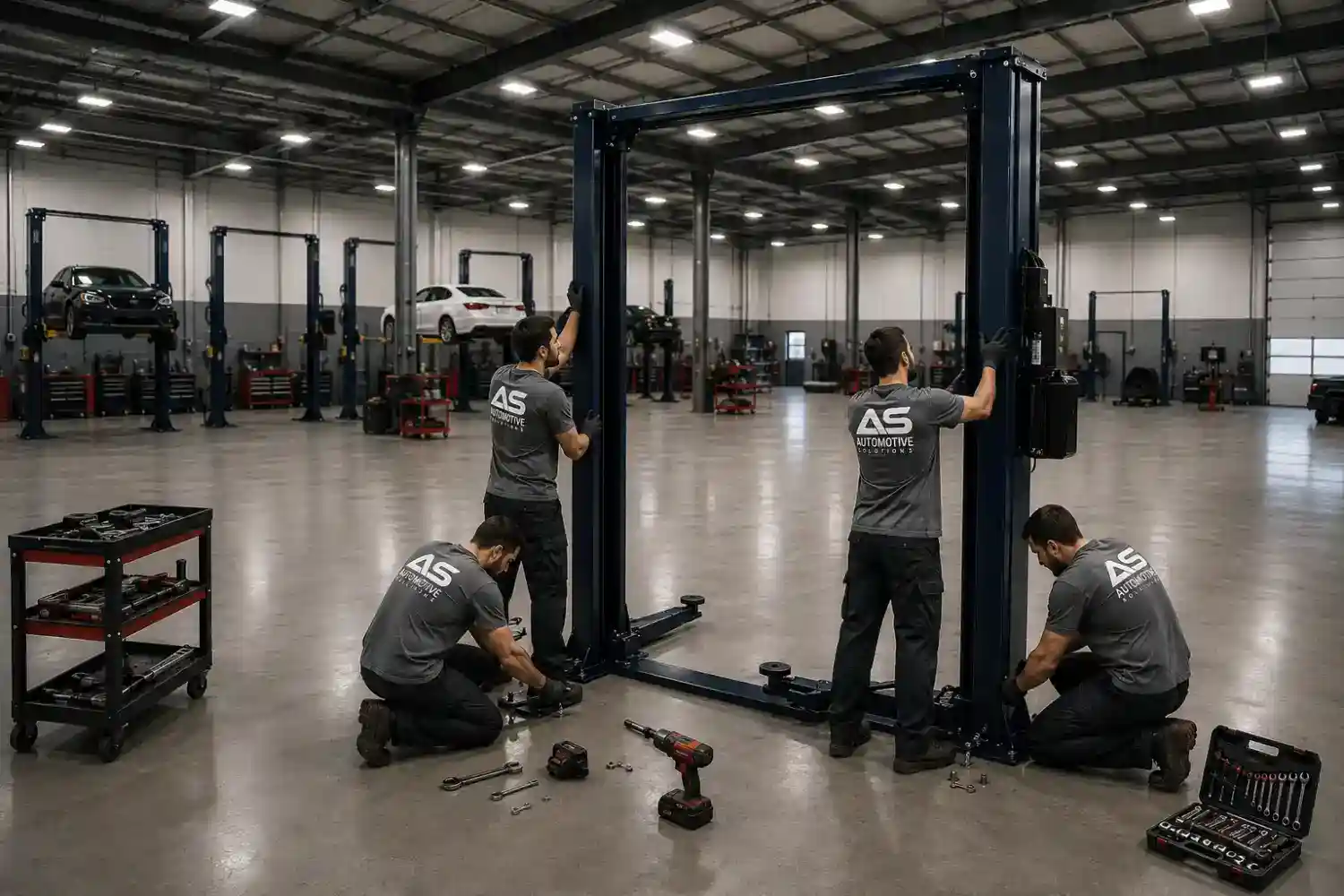
Install Lift Columns:
Place both lift columns in position and secure them with anchor bolts. Ensure the columns are straight, aligned, and properly fixed.
Safety Tip: Lift columns are heavy and should not be moved manually. Use suitable lifting equipment such as a forklift, crane, or lifting trolley to safely position the columns and prevent injury or damage.
Install Connecting System (Different for Both Lift Types)
Base Connected 2 Post Lift
After installing the columns, the base connected frame/plate is installed between both columns. This connecting base provides extra stability and supports the lift structure during vehicle lifting.
Safety Tip: Ensure the base frame is properly aligned before tightening bolts. Do not operate the lift until all connecting parts are securely installed.
Clear Floor 2 Post Lift:
For clear floor lifts, the upper overhead beam/connection system is installed between the columns. This keeps the workshop floor clear and provides complete access underneath the vehicle.
Safety Tip: Use proper lifting equipment when installing the overhead beam. Do not attempt to lift heavy components manually, as improper handling can cause serious injury.
Install Hydraulic System & Components
Install the hydraulic power unit, cylinders, hoses, cables, and safety lock system according to the manufacturer’s instructions.
Safety Tip: Check all hydraulic connections carefully before operation. Hydraulic leaks can reduce performance and create unsafe working conditions.
Install Lift Arms & Safety Locks
Attach the lifting arms and adjust them correctly according to the vehicle lifting points. Test the safety lock system at different heights.
Safety Tip: Never lift a vehicle without checking the correct lifting points. Incorrect arm positioning can cause vehicle imbalance or falling risk.
Test Lift Operation & Calibration:
Perform a complete test of lifting movement, hydraulic pressure, balance, and safety functions before using the lift.
Safety Tip: First test the lift without a vehicle, then perform a load test carefully. Always ensure safety locks are working before servicing vehicles.
Final Safety Inspection & Operator Training:
After installation, provide proper training on lift operation, safety procedures, and maintenance requirements.
Safety Tip: Only trained operators should use the lift. Regular inspections and maintenance help prevent failures and increase equipment lifespan.
Conclusion:
A properly installed 2 post lift improves workshop productivity, provides safer vehicle servicing, and creates a professional working environment. Following correct installation procedures and safety practices ensures reliable performance and long-term durability of your automotive lifting equipment.