










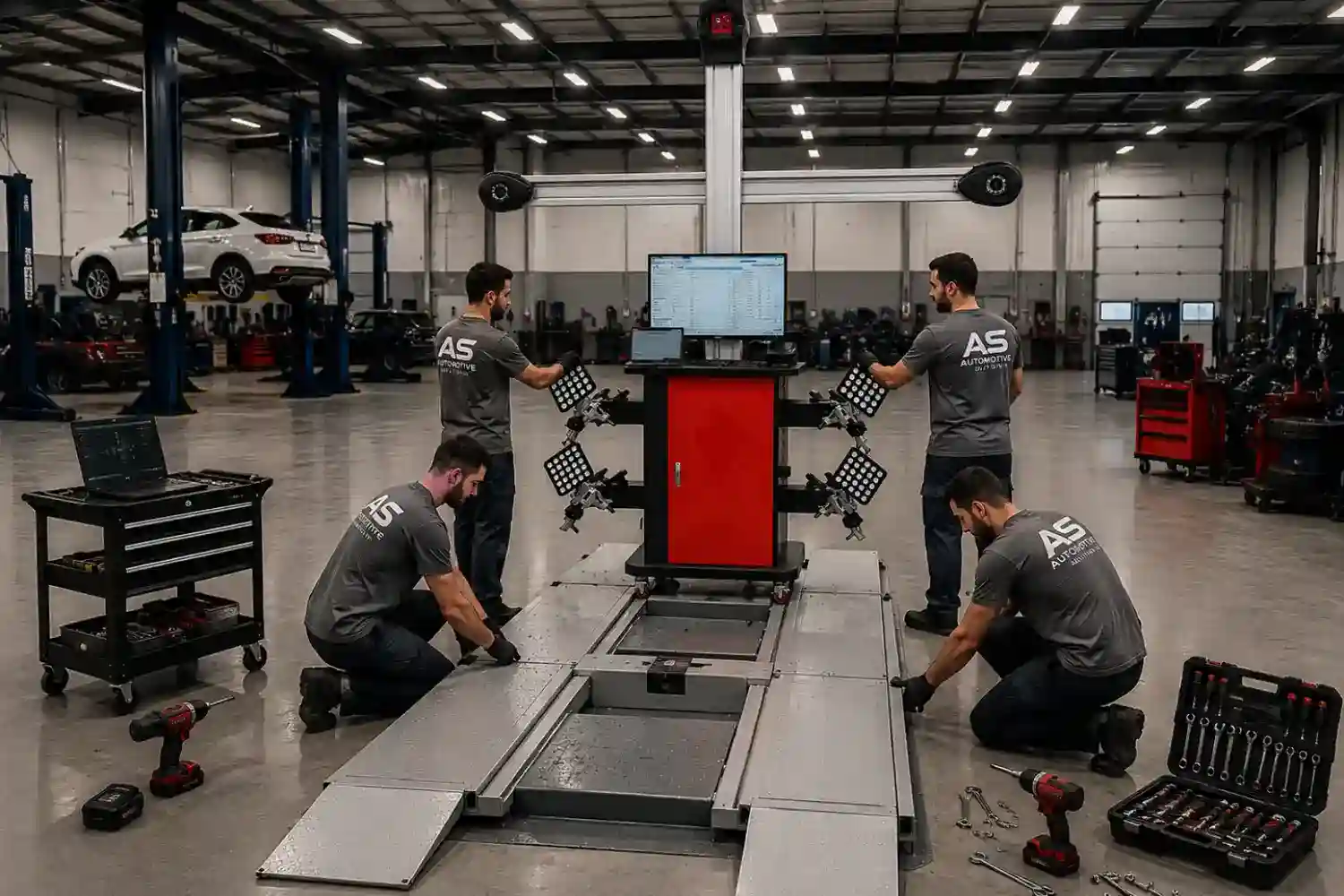
A wheel alignment machine is an essential piece of equipment for modern automotive workshops, helping technicians accurately measure and adjust wheel angles to improve vehicle handling, tire life, and driving safety. Proper wheel alignment not only enhances vehicle performance but also reduces uneven tire wear and fuel consumption. Whether you operate a tire shop, service center, or complete automotive workshop. If you want a wheel alignment machine installation in your workshop don't worry, automotive solutions is here.
Wheel alignment systems can be installed with different lift configurations, including 4 Post Lifts, Scissor Lifts, or dedicated Alignment Bays. Since alignment accuracy depends heavily on installation quality, special attention must be given to floor leveling, lift positioning, camera alignment, and system calibration.
Wheel Alignment Machine Installation Process:
Select the Installation Location:
Choose a dedicated alignment area with sufficient space for vehicle movement, alignment targets, cameras, and technician access. Ensure the location provides a clear view between the alignment cameras and wheel targets.
Safety Tip: Keep the installation area free from obstacles, excessive vibration, and direct impacts that could affect alignment accuracy.
Verify Floor Levelness:
The alignment area must be perfectly level. Uneven floors can lead to inaccurate alignment readings and improper calibration.
Safety Tip: Use a professional laser level or precision leveling tool to verify the floor condition before installation.
Position the Alignment Lift or Alignment Bay:
Install the alignment lift or prepare the alignment bay according to the manufacturer's specifications. Ensure the lift is correctly leveled and secured.
Safety Tip: Double-check lift levelness before continuing. Even minor height differences can affect alignment results.
Mark Equipment Positions:
Mark the exact positions for camera towers, alignment cabinets, sensors, and accessories according to the installation layout provided by the manufacturer.
Safety Tip: Confirm all measurements before drilling or fixing components to avoid repositioning later.
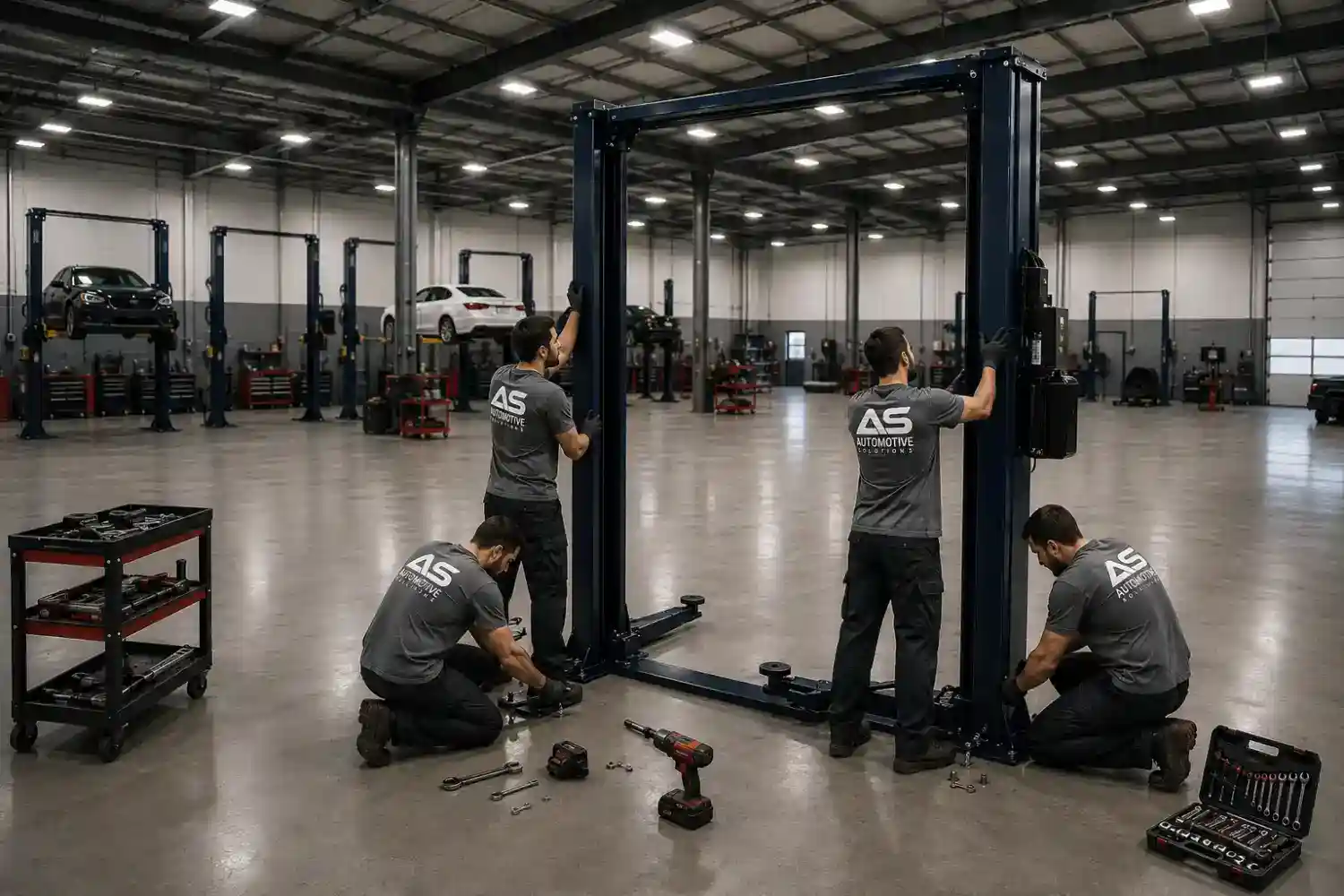
Install Camera Towers or Alignment Columns:
Position and secure the camera towers or alignment columns at the specified distance from the lift or alignment bay.
Safety Tip: Camera towers can be heavy and delicate. Use a forklift, lifting trolley, or multiple technicians when moving and positioning the towers to prevent equipment damage.
Install Cross Beam and Camera System
Mount the camera beam and alignment cameras between the towers according to the manufacturer's guidelines. Ensure cameras are securely fixed and properly aligned.
Safety Tip: Use approved lifting equipment or a stable working platform when installing overhead components. Never stand on unstable objects during installation.
Install the Control Cabinet and Computer System:
Position the control cabinet, computer, monitor, printer, and accessories in a convenient location for technicians.
Safety Tip: Keep electrical components away from water, excessive heat, and high-traffic workshop areas.
Connect Power and Communication Cables:
Connect all electrical wiring, communication cables, cameras, and system accessories according to the wiring diagram.
Safety Tip: Turn off the main power supply before making electrical connections and ensure proper grounding to prevent electrical hazards.
Install Wheel Clamps and Targets:
Attach wheel clamps, targets, or sensors supplied with the alignment machine. Verify that all components are clean and properly secured.
Safety Tip: Handle cameras, targets, and sensors carefully. Dropping or damaging these precision components may affect alignment accuracy.
Perform System Calibration:
Calibrate the wheel alignment machine according to the manufacturer's procedure. Verify camera positioning, target recognition, and measurement accuracy.
Safety Tip: Only trained personnel should perform calibration. Incorrect calibration can result in inaccurate wheel alignment readings.
Conduct Test Alignment
Perform a test alignment using a vehicle to verify system accuracy and operation. Check all readings and ensure the software is functioning correctly.
Safety Tip: Use a vehicle in good condition for testing and ensure it is correctly positioned on the alignment lift before starting measurements.
Final Inspection and Operator Training:
Complete a final inspection of all mechanical, electrical, and software components. Train operators on machine usage, maintenance procedures, and safety requirements.
Safety Tip: Regularly inspect cameras, targets, wheel clamps, and cables to maintain long-term accuracy and performance.
Conclusion
A properly installed wheel alignment machine is critical for delivering accurate alignment services and maintaining customer satisfaction. By following correct installation procedures, proper calibration methods, and essential safety practices, workshops can achieve precise measurements, improve service quality, and maximize equipment performance for years to come.